

In the cockpit
Murdock
The onboard AI assistant for the crew. Runs at the edge, designed for austere and denied environments, and adaptable across many aircraft.
Applied AI for the real world: pilot assistance autonomy, delivered through our data platform.
A safety net, a coach, and a superhuman assistant for the crews flying commercial and military aircraft.
Silicon Valley-based, backed by $20M+ in venture capital from:
We’ve worked with:
A mix of customers, partners, and collaborators, past and present.
Our vision is an aviation sector free from human error.
This vision builds on a decades-old idea. DARPA and the U.S. Air Force set out to build the Pilot’s Associate in the 1980s, and today the technology has caught up.
It will increase capacity, handle the busywork, watch your back, and catch what a tired crew could miss.
The problem
Modern aircraft produce more data than ever, but it’s scattered across avionics, charts, and displays, and the data from briefs, maintenance, and operations keeps growing in volume and complexity.
Context, judgment calls, and briefed intent stay in the pilot’s head, invisible to automation, and the data needed to train a true AI assistant for the crew does not exist yet.
Self-driving showed that an AI assistant or operator needs more context than a human does, not less.
Beacon builds the platform that gives aircrew, and the AI supporting them, the whole picture.
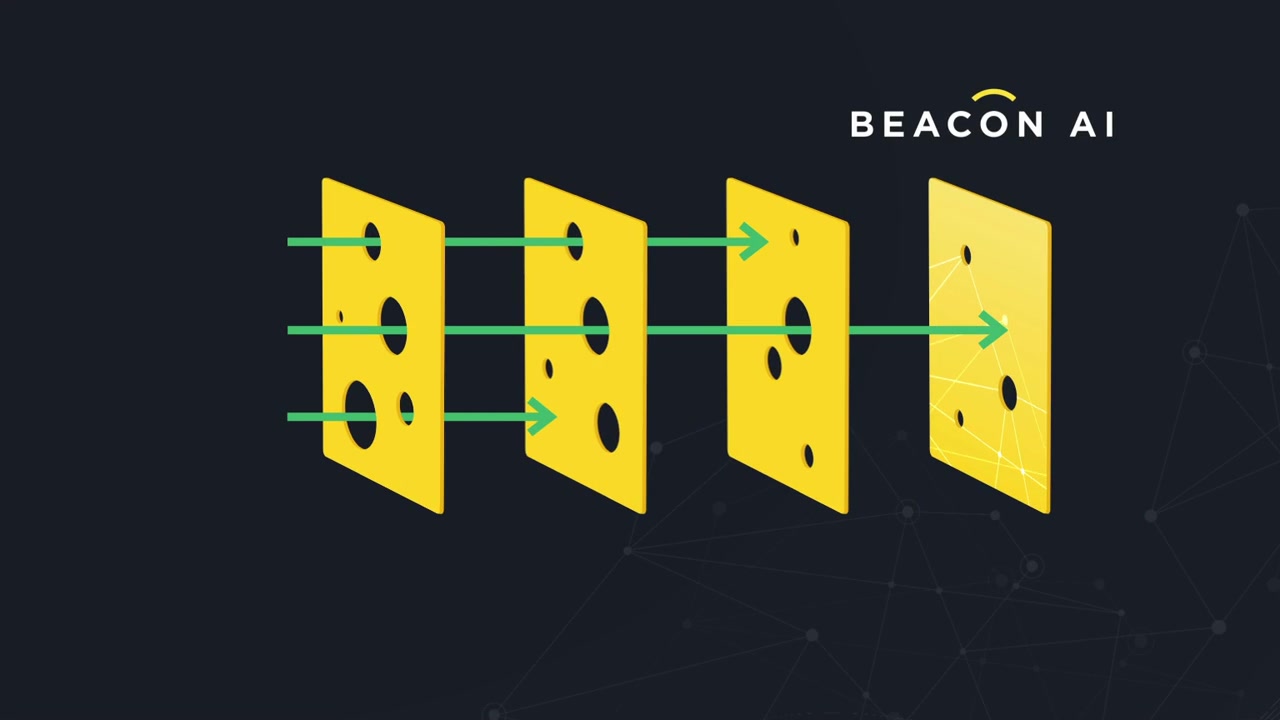
The Swiss cheese model shows how gaps in multiple safety layers can align and let a hazard through. Beacon AI is designed to add another layer of support for the crew.
of aviation accidents involve human error, even as aircraft have never been more reliable.
a year in human-error costs across aviation: military mishaps, hull and liability claims, and damage short of a hull loss.
Sources: National Commission on Military Aviation Safety (2020); Allianz aviation claims, five years to 2024; IATA ground damage study and 2025 Annual Safety Report. Annualized by Beacon from published totals.

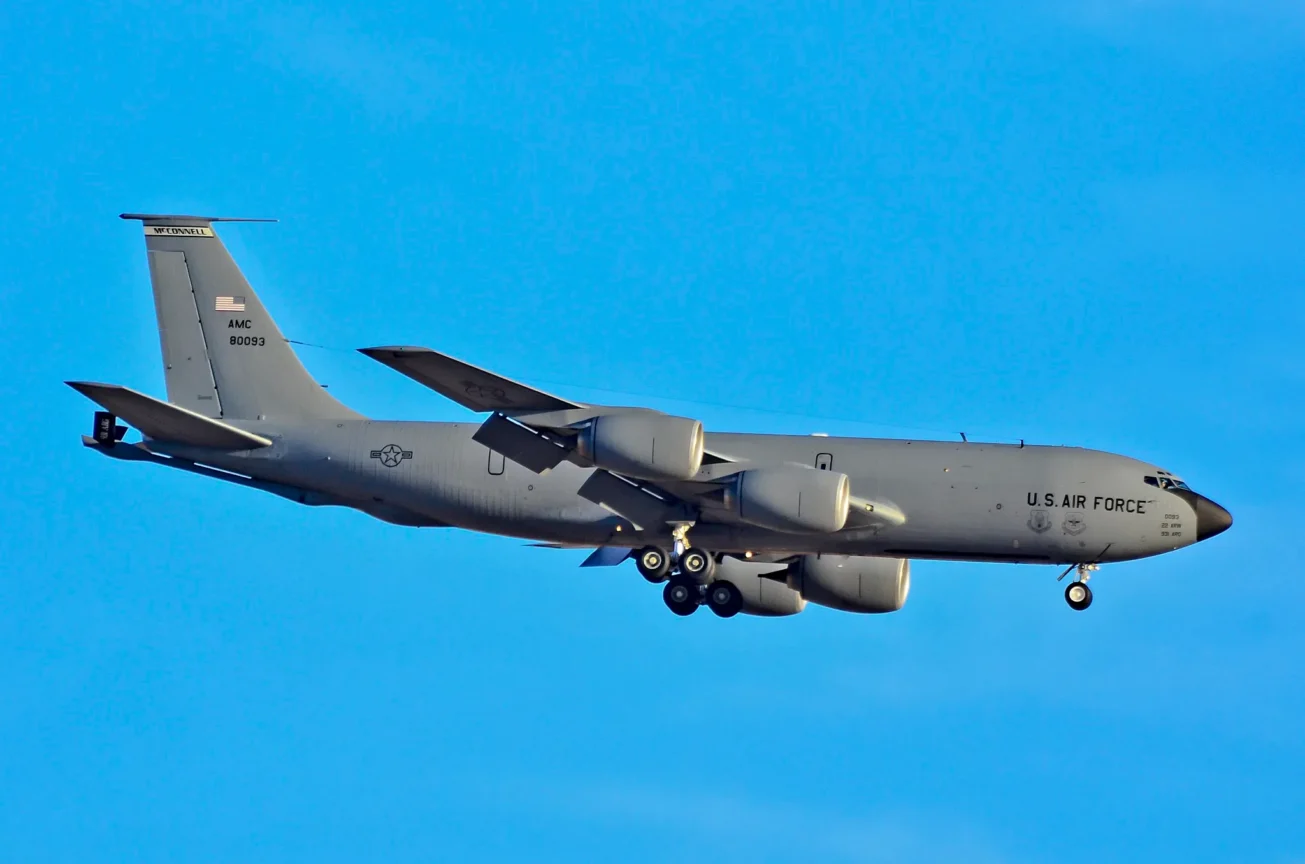
Boeing 767 and its U.S. Air Force KC-46 tanker variant
The same Boeing 767 that Delta, FedEx, Amazon, British Airways, and countless others fly commercially, the U.S. Air Force flies as the KC-46 tanker. In 2026, Murdock flew aboard three operational KC-46As with fleet aircrews, a natural bridge to commercial 767 fleets. Beacon’s aircraft-adaptable platform is built for how professional aviation operates.
~112,000
Professionally flown civil aircraft, plus core U.S. and allied defense aircraft. None flies with AI pilot assistance in day-to-day operations today.
New technology and more connected fleets are opening that door, and the fleet grows to about 151,000 aircraft by 2045.
Sources: IATA, Boeing Commercial Market Outlook 2026, Cirium, Global Firepower, FAA Aerospace Forecast, and USAF operational energy data. Includes Beacon estimates.
Beacon’s founding team pairs former military aviators, including F/A-18 pilots, with engineers who have built self-driving cars and defense-grade autonomy systems. That team has taken pilot assistance from simulator sessions with U.S. Air Force mobility pilots to a cross-country flight-test campaign using Beacon’s aircraft, and then to an in-flight evaluation aboard operational KC-46A tankers. Now Beacon is ramping up to take it from first flights to entire fleets.
Get in touch to see what the platform could do for your operation, or to join the team.